
The Happy Medellín safety guide
Travel smart, feel free, have the time of your life
Medellín is one of the most welcoming cities in the Americas, and a little know-how makes it even better. Here are 86 practical tips from people who live here, written to help you relax, not to worry you.
The short answer, as of Oct 10, 2026
Yes: visitors who use common sense have wonderful, trouble-free trips to Medellín every day. To be fully transparent, the U.S. State Department rates all of Colombia Level 3: Reconsider Travel because of risks in parts of the country. Medellín and the rest of Antioquia's visitor areas are not on its “Do Not Travel” list. The real risks for visitors here are petty theft and scams, especially phone snatching and drink spiking linked to dating apps, and they are very avoidable. This guide shows you how.
01
Before you go
A little prep at home makes the first day in Medellín feel easy. Most of this takes an evening, and it's the difference between 'I hope' and 'I'm ready.'
Read the official advisory, then put it in context
The U.S. State Department rates all of Colombia Level 3 (Reconsider Travel). Medellín and Antioquia are not on the Level 4 'Do Not Travel' list. Read the full advisory at travel.state.gov so you know exactly what it says, then plan around it: daytime exploring, app-booked rides and a low profile.
Enroll in STEP
Sign up for the free Smart Traveler Enrollment Program (step.state.gov). You'll get U.S. Embassy alerts by email, and the Embassy can find you more easily in an emergency.
Passport: 90 days visa-free, one blank page
U.S. citizens don't need a visa for tourism stays of 90 days or less (180 days total per calendar year). Your passport must be valid for your whole stay; the State Department recommends six months of validity and one blank page for the entry stamp. Carry proof of a return or onward ticket, since Colombia may deny entry without one.
Fill in Check-MIG before you fly
Complete Migración Colombia's free online Check-MIG form between 72 hours and 1 hour before your flight. Some sources say it's optional, but the U.S. Embassy tells travelers to complete it and some airlines ask for it. Only use the official migracioncolombia.gov.co site; look-alike sites charge fees.
Buy travel insurance with medical evacuation
Your U.S. plan likely won't work in Colombia, Medicare doesn't work abroad, and hospitals often want payment up front. The State Department strongly recommends coverage that includes medical evacuation.
Pack light on bling
Leave the luxury watch and statement jewelry at home. The State Department and the Embassy both say visible jewelry, expensive watches and designer clothes are how thieves pick targets. Smart-casual is the Medellín look anyway.
Set up a check-in buddy and an alert word
Share your itinerary with someone at home and agree on a check-in rhythm. The State Department suggests a unique 'alert word' your trusted contacts will recognize if you're ever in trouble on a call.
Bring prescriptions in original packaging
Carry medications in their original packaging with your doctor's prescription, and bring enough for the whole trip. Some psychiatric medications aren't sold in Colombia.
Know it's earthquake country
Colombia is seismically active. A magnitude 7.4 earthquake centered in Chocó on August 10, 2026 was felt in Medellín, and Medellín's airport stayed open. Learn the basics (drop, cover, hold on) and follow U.S. Embassy alerts.
Your plugs will fit
Colombia uses the same Type A/B outlets and roughly 110–120 V, 60 Hz power as the U.S., so American chargers and devices work without an adapter.
02
Arriving at José María Córdova (MDE)
Medellín's international airport is in Rionegro, up in the hills east of the city. The ride down into the valley is gorgeous, and it's easy to do safely.
Expect 45 to 60 minutes to town
The airport sits about 40 km by road from El Poblado. Since the Túnel de Oriente opened in 2019, the drive usually takes 45 to 60 minutes, more in traffic or rain.
Use the official taxi line or a pre-booked transfer
Take a taxi from the airport's official rank, a ride you've booked in advance, or an app ride. Never accept an offer from someone who walks up to you in the terminal. The 2026 regulated taxi fare between Medellín and the airport is COP 132,000 for a basic taxi (COP 134,100 electric, COP 143,100 luxury), effective February 2, 2026.
The airport bus is a good budget option
Combuses runs 24/7 between the airport and San Diego, the Hotel Nutibara area and Estación Exposiciones for COP 20,000 per person (2026 fare). You can pay with cash, a Cívica card or, at some points, debit or credit card. From the drop-off, take an app ride to your door.
Get cash inside the terminal, and only a little
If you need pesos, use an ATM inside the terminal and take only what you need for the first day or two. Don't count bills in public.
Have your address ready in writing
Save your accommodation's full address and phone number offline, in Spanish, so you can show it to a driver even if your phone has no signal.
Keep your phone out of sight at the curb
The Embassy advises stepping inside a shop or secure spot before using your phone. Arrange your ride inside the terminal and keep the phone in your pocket on the curb.
Arrive in daylight if you can
The State Department advises traveling during daylight hours and avoiding road travel outside cities at night. A daytime landing also gives you the best views on the drive down.
Be polite and patient at immigration
Few officers speak English. Have your passport, Check-MIG confirmation, return ticket and accommodation details ready, answer simply, and follow instructions.
03
Getting around
Medellín has one of Latin America's best public transport networks, and it's a point of local pride. The safety rule is simple: plan your rides instead of flagging them.
Don't hail taxis on the street
This is the State Department's clearest instruction for Colombia: U.S. citizens have been killed in robberies in street-hailed taxis. Use a dispatch service, your hotel's taxi or a ride app every time.
Ride apps work well in Medellín
Uber, DiDi, Cabify and InDrive all operate in Medellín. Private-car service on these apps sits in a legal gray area in Colombia (a February 2026 bill to restrict them was withdrawn for revision), but they're widely used. Many apps also let you book a licensed yellow taxi, which is the fully regulated option.
Check the plate before you get in
Match the plate, car model and driver photo to the app before opening the door, and use the app's trip-sharing feature so a friend can follow your ride.
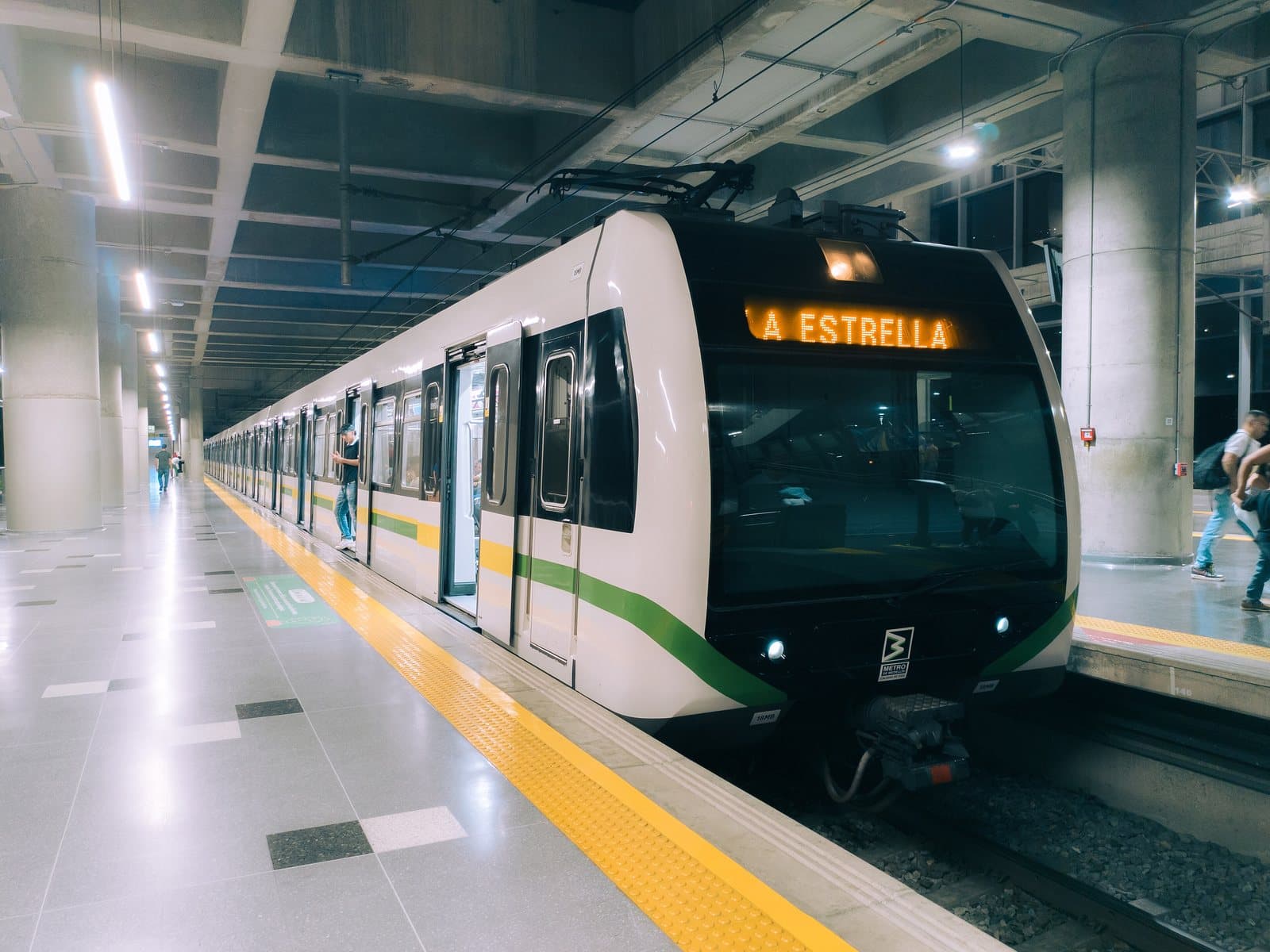
Ride the Metro: clean, fast and loved
Metro lines run 4:30 a.m.–11:00 p.m. Monday to Saturday and 5:00 a.m.–10:00 p.m. on Sundays and holidays; the last trains leave the end stations at 10:40 p.m. (10:00 p.m. on Sundays). Locals treat it with real respect, so keep it tidy and give up seats for older riders.
Buy a Cívica card
The Cívica card pays for the Metro, tranvía, Metrocable and integrated buses. A visitor ('eventual') card costs COP 12,100 at station ticket booths, and a standard trip is COP 4,400 on that profile (2026 fares).
Metrocable for the views
The cable cars glide over hillside neighborhoods. On Sundays and holidays some lines start later (Line K at 8:30 a.m.; H, J, M and P at 9:00 a.m.). Line L up to Parque Arví runs 9:00 a.m.–6:00 p.m. (8:30 a.m. on Sundays), is closed Tuesdays and charges foreigners COP 26,700.
Ride smart at rush hour
Trains get packed at commute peaks, which is when pickpockets work. Wear your backpack on your front, keep your phone in a front pocket and travel off-peak when you can. Note that the State Department bars its own staff from public transport in Colombia, so take the usual precautions and favor daytime rides.
Skip motorcycle taxis
U.S. government employees in Colombia aren't allowed on motorcycles, and traffic laws are loosely enforced. Stick to cars, the Metro and your feet.
Walk with purpose and a plan
Check your route before you set off rather than following your phone down the street. The State Department notes that GPS apps pick the shortest route, not the safest. At night, take an app ride even for short distances.
04
Money
Colombia runs on pesos (COP). Cards are widely accepted in Medellín's restaurants and shops, and a few habits keep your money where it belongs.
Use credit cards where you can
The State Department recommends paying by credit card whenever possible, so you carry less cash. Check your statements regularly for skimming.
ATMs: inside, in daylight
Use ATMs inside banks, shopping malls or other protected spots, never on the street. Withdraw in daylight, shield the keypad and put the cash away before you walk out.
Carry a 'day wallet'
Keep a small amount of cash and one card for the day, and leave your backup card and passport locked at your lodging. If you're robbed, you lose very little.
Tipping: the 'propina voluntaria'
Restaurants usually suggest a voluntary service charge of up to 10%. By law (Ley 1935 of 2018) it's optional, it can't exceed 10%, and staff must ask before adding it to the bill. Say yes if service was good, which it usually is.
Exchange at reputable places
If you bring dollars, exchange them at a bank or an established exchange office (casa de cambio), not with people on the street. Compare the rate before you hand over cash.
Don't talk money with new friends
The Embassy specifically advises against discussing your finances or travel plans with people you've just met. Keep it friendly and vague.
The $10,000 rule
Declare cash over USD 10,000 when you enter or leave Colombia, and be ready to prove where it came from.
If an ATM eats your card or something feels off
Call your bank right away with the number saved in your phone (not one posted on the machine), and switch to your backup card.
05
Neighborhoods
Medellín is a city of distinct, walkable neighborhoods, each with its own personality. Here's how to enjoy the favorites with confidence.
El Poblado and Provenza: lively, and worth extra care
Poblado is the hub for hotels, restaurants and nightlife. Because it's popular with visitors, it also draws opportunists: Medellín's security data (SISC) for 2026 show El Poblado with the city's highest count of drugging-related robberies (108 cases by early August). Enjoy it, but stay sharp.
Laureles: leafy, local and walkable
Laureles-Estadio has tree-lined streets, cafés and a more residential feel. It's also busy at night, with the second-highest drugging-robbery count in the 2026 city data, so the same nightlife rules apply.
El Centro by day, with a guide
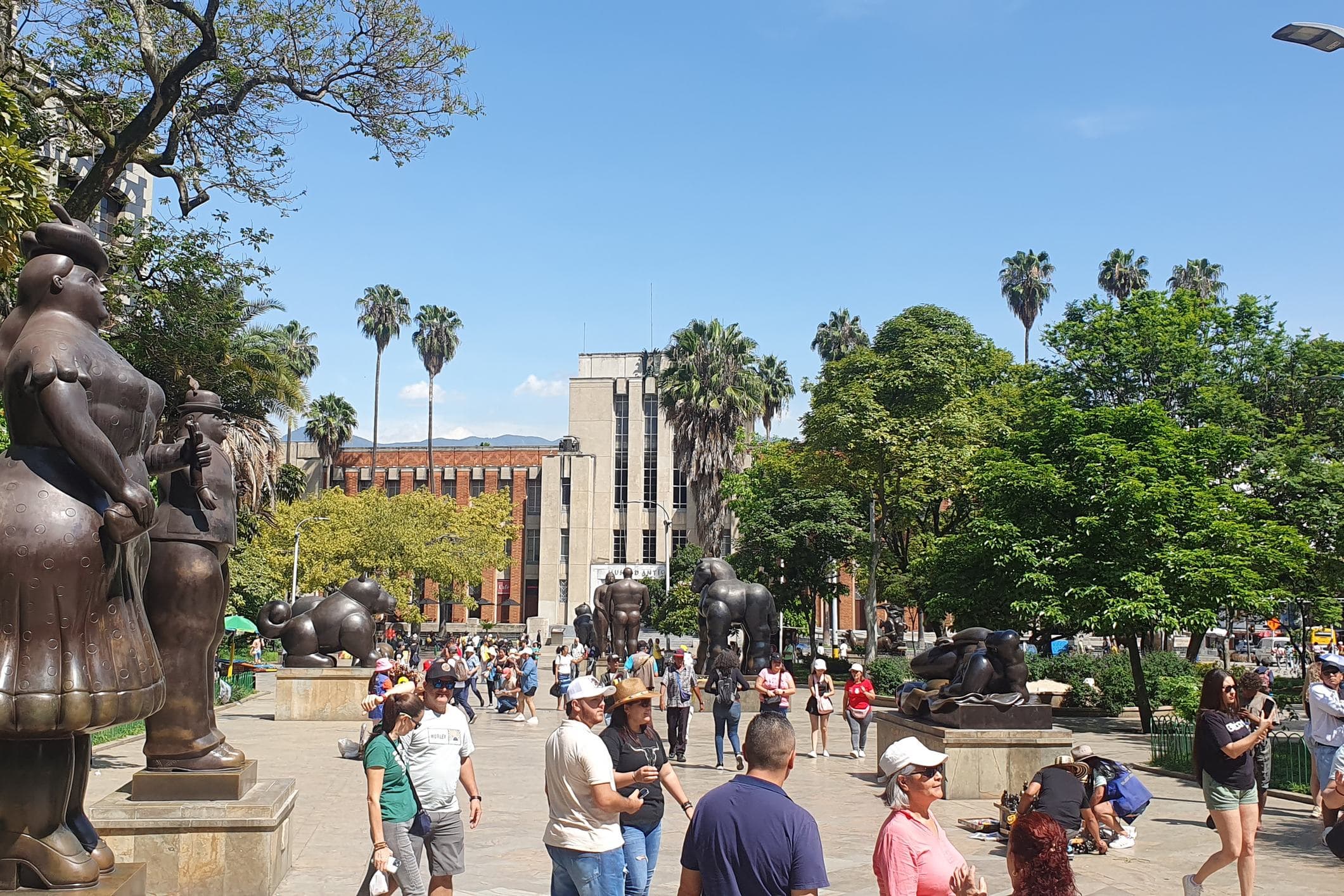
Downtown (La Candelaria) is home to Plaza Botero and the city's history. It's busy and full of pickpockets, with about 15% of the city's reported thefts in January 2026. Visit by day, ideally with a guide, and keep valuables tucked away.
Comuna 13 the right way
Comuna 13's graffiti and outdoor escalators tell one of the city's most moving stories. Go with a local guide from the community, who knows the neighborhood and shares its history. Daytime is best.
Envigado and Sabaneta for a local vibe
Just south of Poblado, these municipalities have plazas, family restaurants and a slower pace. They're easy to reach by Metro or app ride.
Hillsides: landslides and rain
The State Department notes landslide risk in hillside settlements in Medellín, especially during the rainy seasons (roughly March to mid-June and mid-September to mid-December). Stick to established routes and guided visits.
Stay where you're registered
Choose accommodation with a 24-hour front desk or building security. It helps with everything from late arrivals to the Embassy's guest-registration advice.
Day trips: know the map
The U.S. Level 4 areas are nowhere near Medellín. The UK advises against non-essential travel to Antioquia's Urabá and Bajo Cauca regions. Book day trips with established operators and be back before dark.

06
Nightlife
Medellín's nights are warm, musical and full of friendly people. The main risk isn't the dance floor; it's what can end up in an unwatched drink.
Your drink never leaves your hand
Criminals use drugs you can't see, smell or taste, including scopolamine ('burundanga'), to rob or assault people, and they're especially dangerous mixed with alcohol. Never leave a drink unattended. If you set it down, order a new one.
Watch it being made
Order at the bar and watch the bartender pour. Bottles and cans you open yourself are easiest to keep track of.
Politely decline drinks, food and cigarettes from strangers
The Embassy advises against accepting drinks from strangers or people you don't know well. The UK warns that drugs can also be passed through food, cigarettes, aerosols and even paper flyers. 'No, gracias' works perfectly.
Arrive together, leave together
Go out as a group, agree on a meeting point, and don't let a friend leave alone or with someone new. Medellín's 2026 data put the most drugging-related robberies in the nightlife hubs: El Poblado, Laureles and the Centro.
Order your ride from inside
Book your app ride before you step out, wait inside until it arrives, and check the plate. Don't walk home after a night out, even a short way.
Know the signs of drugging
Sudden confusion, extreme drowsiness or feeling far drunker than you should are warning signs. Get to a trusted friend or staff member, call 123 and get medical care right away.
Pace yourself and hydrate
Medellín sits at about 1,495 meters (4,900 ft) and nights out run late. Alternate drinks with water (the tap water is safe), eat something, and decide your exit time before you go.
Keep your stuff boring
Leave the expensive watch at home, keep your phone in a front pocket and bring only the cash you need for the night.

07
Dating and new friends
Paisas are famously warm, and making friends is one of the joys of Medellín. Dating apps are where caution matters most: the U.S. Embassy says criminals use them to set up robberies and drugging.
Meet in a busy public place, always
First meetings belong in a popular café, restaurant or mall. The State Department warns criminals use apps to lure victims to hotels, restaurants and bars, often working with accomplices, so choose the venue yourself.
Never go to a stranger's apartment, or bring them to yours
The State Department's advice: avoid any place where you could be isolated, including hotel rooms, private apartments and houses. Keep early dates in public, and take your time before inviting anyone to your place.
Register every visitor at the front desk
If someone does visit later, the Embassy advises having them register with building security or hotel reception using their physical Colombian ID card (cédula), not a photo of it.
Video call first
A quick video call before meeting confirms the person is real and matches their profile. The State Department recommends it in the early stages.
Send a 'safety screenshot' to a friend
Share your date's profile, photos, the app you met on, and where and when you're meeting with a trusted friend. Agree on a check-in time.
Men are targeted too
The Embassy notes that both men and women, traveling alone or in groups, have been victimized. Nobody is too savvy or too experienced for these rules.
Verify age; respect the law
Sexual activity with anyone under 18 is a serious crime in Colombia, and not knowing someone's age is not a legal defense. Pimping and trafficking are also crimes, and Medellín has cracked down on commercial sexual exploitation around Parque Lleras and Provenza. We don't arrange or support sex tourism of any kind.
Watch for romance scams
Romance and money-transfer scams are common. If someone you met online asks for money, a loan or 'help with a fee,' end it.

08
Health
Medellín is one of Colombia's leading medical cities, home to hospitals ranked among Latin America's best. Here's how to stay well and get care fast if you need it.
Yes, you can drink the tap water
Medellín's water comes from EPM, whose quality lab tests more than 70 samples a day; the city says EPM water can be drunk 'with absolute confidence' straight from the tap. Outside the metro area and in rural Colombia, stick to bottled water.
Altitude is gentle here
Medellín sits at about 1,495 meters (roughly 4,900 ft). Most visitors adjust easily, but you may feel a little more out of breath on hills at first. Hydrate and take day one easy. If you're heading higher, for example to Bogotá, read the CDC's high-altitude guidance.
Sun is stronger than it feels
With spring-like weather averaging about 24°C (75°F) and sitting near the equator at altitude, the UV is strong even when it's mild. Wear sunscreen and a hat.
Know your nearest top hospital
Hospitals that rank well regionally include Hospital Pablo Tobón Uribe, Hospital San Vicente Fundación and Clínica Las Américas AUNA. Clínica El Rosario and Clínica Medellín both have campuses in El Poblado.
Expect to pay up front
Hospitals often require payment before treatment, and some take only cash. Keep your insurer's 24/7 number and policy details saved offline.
In a serious emergency, a car can be faster
Call 123 for an ambulance. The State Department notes that in large cities a taxi or car to the hospital may be quicker than waiting for an ambulance.
Buy medicine at reputable pharmacies
Pharmacies sell many drugs with few controls, and counterfeits exist. Buy from established pharmacy chains or hospital pharmacies, ideally with a doctor's advice.
Planning a procedure? Do your homework
If you're considering elective or cosmetic surgery, research the surgeon and recovery facility, confirm credentials and buy evacuation insurance. The State Department notes quality varies and U.S. citizens have suffered serious complications.
Mosquito-borne illness is mostly a lowland issue
The State Department lists dengue, Zika and chikungunya among the risks in Colombia. Pack repellent if you're heading to lower, warmer areas outside the valley.

09
Phone and connectivity
Your phone is your map, your ride and your lifeline, and it's also the most-stolen item in Medellín. Keep it connected and keep it hidden.
Phones are the #1 target
Phone theft is the most common robbery in Medellín. Snatch-and-run thefts ('raponazo'), pickpocketing ('cosquilleo') and ride-by robberies by motorcycle are all common. Assume someone is watching when your phone is out.
Step inside before you scroll
The Embassy's advice: don't use your phone on the sidewalk or near the street. Step into a shop, café or lobby to check maps or messages.
Travel eSIM is the easiest option
A travel eSIM or your U.S. carrier's international plan gets you online the moment you land, with no paperwork.
Local SIMs: Claro, Movistar and Tigo
For a Colombian number, buy a prepaid SIM at an official Claro, Movistar or Tigo store and bring your passport. Ask the store to register your phone's IMEI on the spot (it's free): phones from abroad running a local SIM must be registered with the operator, or the line can be blocked.
Share a local number for emergencies
The State Department suggests giving friends and family a local number they can call if something goes wrong, such as a suspected drugging.
Lock it down before you go
Update your phone, turn on a strong passcode and biometrics, enable Find My/Find My Device, and turn on two-factor authentication for banking and email. If the phone is snatched, a locked phone protects your accounts.
Be careful on public Wi-Fi
The State Department advises against connecting to unknown open Wi-Fi networks and suggests a reputable VPN.
Download offline maps and a translator
Offline maps and a Spanish pack in your translator app mean you can plan routes indoors and talk to anyone, even without a signal.

10
If something happens
Most trips to Medellín are wonderful and uneventful. If something does go wrong, knowing the next three steps takes away a lot of fear.
Never resist a robbery
Hand it over. The State Department and Embassy are clear: street crime can quickly turn violent, and your life is worth more than any phone or wallet. That's why we suggest a day wallet and leaving valuables at your lodging.
Call 123
123 is Colombia's single number for police, ambulance and fire. In Medellín, calling 911 is routed to 123 with a bilingual operator under a 2024 city–Embassy arrangement.
Call the U.S. Embassy
American Citizen Services in Bogotá: +57 601 275 2000 (after hours, press 0 or call +57 601 275 4021). The Embassy can replace a passport, help you find medical care, help you report a crime and contact family with your consent.
Suspect a drugging? Get help immediately
If you or a friend suddenly feel confused, extremely drowsy or 'blacked out,' get to a safe person, call 123 and go to a hospital. Tell the doctors you suspect drugging.
File a police report
The Embassy urges you to report every crime, which helps police track patterns, and you'll need the report for insurance. Expect language barriers; ask your hotel or a Spanish-speaking friend to help.
Freeze your cards and accounts fast
Call your bank and card companies right away, change passwords for email and banking, and use Find My to lock or erase a stolen phone. Report a stolen phone to your carrier too.
Lost or stolen passport
You must get a new U.S. passport before leaving Colombia. Report the loss to the Colombian National Police online, then contact the Embassy for an appointment.
Kidnapping or extortion threats: call 165
GAULA, the National Police unit for kidnapping and extortion, takes reports on the free 165 line. Also call the U.S. Embassy.
Domestic or gender-based violence: call 155
Dial 155 (*155 from a mobile) for help from Colombian authorities in Spanish, and contact the Embassy, which assists U.S. citizen victims of sexual assault.
Let your insurer guide medical care
Call your travel insurer's 24/7 line early. They can direct you to an in-network hospital, guarantee payment and arrange evacuation if needed.
Emergency numbers
Save these in your phone before you land. You will almost certainly never need them.
- All emergencies (police, ambulance, fire)
- 123
- Colombia's single emergency number, per the U.S. State Department. Free from any phone.
- Tourist line (Medellín)
- 911
- Under a 2024 Medellín–U.S. Embassy arrangement, 911 calls from visitors are routed to 123 with a bilingual operator (Minuto30, March 1, 2024). 123 works either way.
- U.S. Embassy Bogotá, American Citizen Services
- +57 601 275 2000
- Main line; after hours press 0 or call +57 601 275 4021. Email Colombia.ACS@gdit-gss.com.
- Domestic and gender-based violence
- 155
- Dial *155 from a mobile. Spanish-language line run by Colombian authorities (per State Dept).
- GAULA (kidnapping and extortion)
- 165
- Free Colombian National Police line for kidnapping or extortion threats.
Top hospitals for visitors
- Hospital Pablo Tobón UribeRobledo (Calle 78B #69-240)
- Clínica Las Américas AUNABelén, La Mota (Diagonal 75B #2A-80/140)
- Hospital San Vicente Fundación (Medellín)North-central Medellín (also runs a hospital in Rionegro near the airport)
- Clínica El Rosario, Sede El TesoroEl Poblado (Carrera 20 #2 Sur-185); second campus Sede Centro, Carrera 41 #62-5
- Clínica Medellín, Sede El PobladoEl Poblado (Calle 7 #39-290)
Phrases that help
- Hola, buenos días / buenas tardes / buenas noches
- Hello, good morning / good afternoon / good evening
- Por favor / Gracias / Con mucho gusto
- Please / Thank you / You're very welcome (the classic paisa reply)
- ¿Me regala…?
- Could I have…? (the polite, very Colombian way to order)
- La cuenta, por favor
- The check, please
- Sí, con la propina / Sin propina, gracias
- Yes, include the tip / No tip, thanks
- No, gracias
- No, thank you (for drinks or offers from strangers)
- ¿Dónde queda la estación de metro?
- Where is the metro station?
- Una tarjeta Cívica, por favor
- A Cívica card, please
- Voy para esta dirección
- I'm going to this address
- ¿Cuánto cuesta?
- How much does it cost?
- No hablo mucho español. ¿Habla inglés?
- I don't speak much Spanish. Do you speak English?
- ¿Puede hablar más despacio, por favor?
- Can you speak more slowly, please?
- ¡Ayuda!
- Help!
- Llame a la policía / a una ambulancia
- Call the police / an ambulance
- Necesito un médico
- I need a doctor
- Creo que me drogaron
- I think I've been drugged
- Me robaron el celular
- My phone was stolen
- Soy alérgico / alérgica a…
- I'm allergic to… (male / female)
- ¿Dónde está el baño?
- Where is the restroom?
- No dar papaya
- 'Don't give papaya': don't hand anyone an easy opportunity (the local golden rule)
- ¡Qué chévere! / ¡Qué bacano!
- How cool! / Awesome!
- Parce / Parcero
- Buddy, friend (Medellín slang)
Good news
A city that reinvented itself
Why so many people who visit Medellín end up staying.
From the world's most violent city to a near-record low
In 1991 Medellín recorded 416.4 homicides per 100,000 residents. By 2024 the rate had fallen to 11.3 per 100,000, the lowest since 1942. In September 2026 the city reported just five homicides, down 79% from September 2025, and it projects a 2026 rate near 9.2 per 100,000, below the national average.
Named 'Innovative City of the Year' (2013)
In a global contest run by Citi, The Wall Street Journal and the Urban Land Institute, Medellín beat finalists New York and Tel Aviv. It was recognized for its public transport, new civic landmarks and falling crime.
Lee Kuan Yew World City Prize (2016)
Singapore's prestigious urban prize named Medellín its 2016 laureate for transforming itself in about two decades, through investment in multimodal transport and public space, into a model of urban innovation.
Metrocable: a cable car built for neighbors, not tourists
Line K opened in 2004 and connected the hillside neighborhood of Santo Domingo Savio to the Metro, roughly halving commute times from about two hours to one. It became a world symbol of 'social urbanism': putting the best public investment in the places that had been left behind.
Library parks, and a comeback in 2026
Parque Biblioteca España, designed by Giancarlo Mazzanti and opened in 2007, was the first of Medellín's library parks. After structural problems closed it in 2015, it reopened as Parque Biblioteca Santo Domingo on June 18, 2026.
Comuna 13's outdoor escalators
In December 2011, Comuna 13's Las Independencias neighborhood received the world's first outdoor urban escalators for residents, turning a punishing hillside climb into a ride of a few minutes. Today the neighborhood's graffiti tours are among Medellín's best-loved experiences.
A Metro the city truly loves
The Metro de Medellín marked 30 years of service in late 2025. It's known for spotless stations and 'Cultura Metro', a code of courtesy that locals take real pride in.
Safe tap water for about 4 million people
EPM's water-quality lab runs more than 70 analyses a day for the Aburrá and San Nicolás valleys, and the city says you can drink EPM water 'with absolute confidence' straight from the tap.
Want us to plan it safely for you?
Every Happy Medellín itinerary and journey is built around these principles, so you can simply enjoy the city.
Sources (36)
- https://travel.state.gov/en/international-travel/travel-advisories/colombia.html (Level 3, reissued 2026-03-31; read via Internet Archive snapshot of 2026-06-25 because the live page is behind a bot check)
- https://co.usembassy.gov/straight-talk-about-crime-in-colombia/ (Security Alert, 2026-07-22)
- https://co.usembassy.gov/natural-disaster-alert-colombia-earthquake-update-4-august-14-2026/
- https://co.usembassy.gov/security-alert-elevated-risk-of-attacks-in-norte-de-santander-department-colombia-september-29-2026/
- https://www.gov.uk/foreign-travel-advice/colombia (updated 2026-10-06)
- https://travel.gc.ca/destinations/colombia (updated 2026-10-09)
- https://www.metrodemedellin.gov.co/usuarios (hours, Cívica and 2026 fares)
- https://telemedellin.tv/?p=163287 (2026 airport taxi fares)
- https://www.elcolombiano.com/medellin/bus-aeropuerto-medellin-sube-20000-nueva-tarifa-combuses-2026-AJ32191890
- https://en.wikipedia.org/wiki/T%C3%BAnel_de_Oriente
- https://www.publimetro.co/bogota/2026/02/03/gobierno-retira-proyecto-de-ley-que-pretendia-regular-plataformas-de-transporte-en-colombia/
- https://www.valoraanalitik.com/cabify-buscara-crecer-en-ciudades-intermedias-e-impulsar-segmento-de-logistica/
- https://www.minuto30.com/amp/medellin-y-la-embajada-de-estados-unidos-ya-tienen-acciones-para-garantizar-la-seguridad-de-turistas-en-la-ciudad/1588995/
- https://www.policia.gov.co/noticia/gracias-una-denuncia-traves-linea-telefonica-165-del-gaula-policia-nacional-capturo-dos
- https://www.infobae.com/colombia/2026/08/08/estas-son-las-comunas-de-medellin-donde-mas-roban-usando-escopolamina-el-poblado-encabeza-la-lista/ (SISC data)
- https://newsroom.rcnradio.com/colombia/hurtos-en-medellin-2026-autoridades-reportan-descenso-pese-a-alta-incidencia
- https://www.elcolombiano.com/medellin/en-medellin-van-2000-robos-mas-que-el-ano-pasado-kj22184824
- https://www.siigo.com/blog/propina-colombia-ley-1935/ (Ley 1935 de 2018)
- https://www.medellin.gov.co/es/sala-de-prensa/noticias/por-que-medellin-es-llamada-la-ciudad-de-la-eterna-primavera/ (1,495 m, ~24°C)
- https://www.medellin.gov.co/es/sala-de-prensa/noticias/laboratorio-control-calidad-aguas-de-epm-cumplio-40-anos/
- https://www.valoraanalitik.com/hasta-cuando-llovera-en-medellin-la-ciudad-tendra-precipitaciones-hasta-estas-fechas/ (IDEAM rainy seasons)
- https://www.crcom.gov.co/es/preguntas-frecuentes/si-traigo-un-celular-desde-extranjero-lo-debo-registrar
- https://consultorsalud.com/wp-content/uploads/2025/09/Ranking-Intellat-2025-Mejores-Hospitales-y-Clinicas-de-America-Latina.pdf
- https://hptu.org/ ; https://www.clinicaelrosario.com/ ; https://www.lasamericas.com.co/ ; https://www.sanvicentefundacion.com/ ; https://www.clinicamedellin.com/
- https://www.medellin.gov.co/es/sala-de-prensa/noticias/el-alcalde-federico-gutierrez-establecio-nuevas-medidas-contra-la-explotacion-sexual-comercial-en-varios-puntos-de-el-poblado/
- https://www.corteconstitucional.gov.co/relatoria/2010/t-629-10.htm
- https://colombiamove.com/blog/no-dar-papaya-meaning-colombia-expat-safety/
- https://www.elcolombiano.com/medellin/medellin-es-la-cuidad-con-menos-homicidios-de-capitales-colombia-LF25648542
- https://telemedellin.tv/?p=198637
- https://www.citigroup.com/global/news/perspective/2013/announcing-this-years-city-of-the-year
- https://planetizen.com/node/61006
- https://www.leekuanyewworldcityprize.gov.sg/documents/laureates_retrospective.pdf
- https://www.wri.org/insights/transformaciones-urbanas-en-medellin-el-metrocable-conecta-la-ciudad-de-diversas-maneras
- https://www.semana.com/nacion/articulo/medellin-estrena-escaleras-electricas-comuna-13/251323-3/
- https://www.elcolombiano.com/medellin/reapertura-biblioteca-santo-domingo-savio-medellin-luego-de-11-anos-de-espera-DO37825622
- https://apps.migracioncolombia.gov.co/pre-registro/ (Check-MIG)